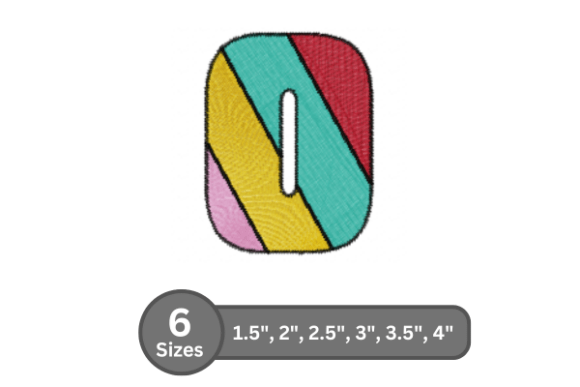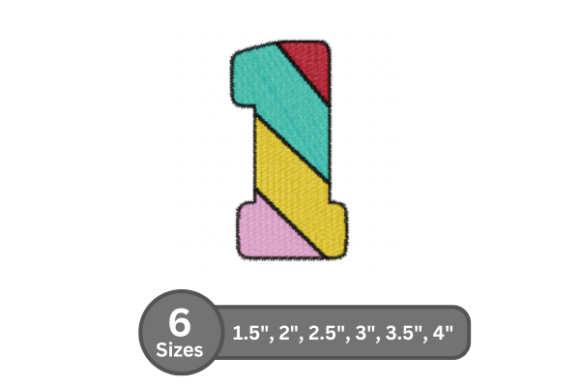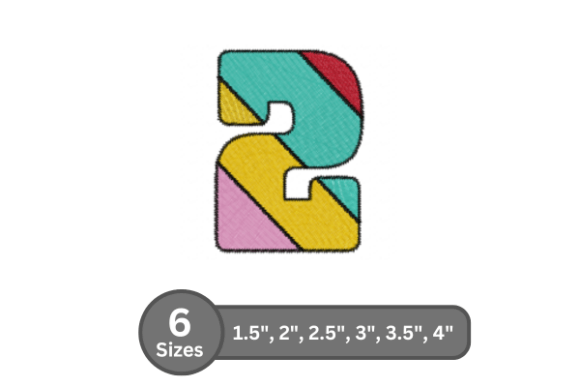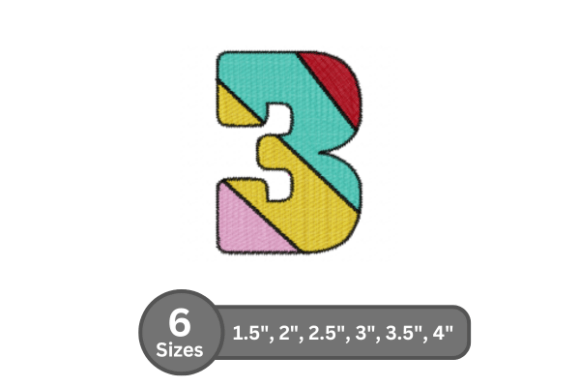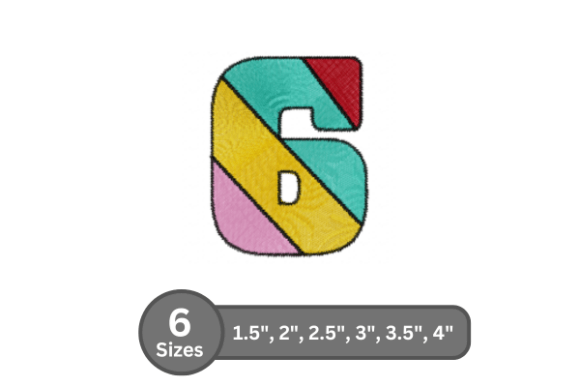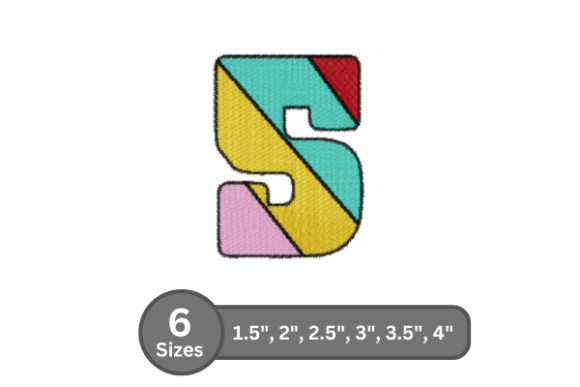
Candy Stripe Number -5
First Impression: A Blend of Playfulness and Professionalism
Candy Stripe Number -5 immediately strikes a balance between playful and professional. The name suggests a classic, nostalgic design, yet the description hints at precision and quality. As an embroidery designer, I find this font to be versatile enough for both casual and branded use. It feels friendly and approachable, which makes it ideal for small businesses looking to connect with their customers on a personal level.
Design Performance in Real Business Use
Candy Stripe Number -5 is built for commercial embroidery projects. Its fill stitch construction ensures smooth stitching and professional results, making it a reliable choice for custom apparel, embroidered patches, and branded merchandise. Whether you're creating apron embroidery, cap embroidery, or tote bag designs, this font offers a consistent look that enhances product value without overwhelming the design.
The font's structure allows for easy adaptation across various fabric types and textures. From soft cottons to textured materials, Candy Stripe Number -5 maintains its clarity and legibility. This adaptability is crucial for small business merch and handmade products where visual consistency is key.
Where to Use with Care
While Candy Stripe Number -5 is highly functional, there are specific applications where extra attention is needed. For instance, when using it on small patch sizes, the detail may become lost due to limited space. Similarly, curved surfaces like caps can cause distortion if not properly tested. Tiny lettering should also be approached with caution, as high stitch density can lead to uneven results.
Dark uniforms and fabrics pose another challenge. The contrast between thread colors and dark backgrounds is critical for visibility. As a designer, I recommend testing Candy Stripe Number -5 in black and white first to ensure it works well in all lighting conditions. Additionally, fabric texture can affect how the design appears, so it's essential to test on real material before mass production.
Impact on Brand Identity and Customer Trust
Branding is more than just a logo—it’s about creating a lasting impression. Candy Stripe Number -5 contributes significantly to brand identity by offering a clean, recognizable design that aligns with a variety of business aesthetics. Whether used as a chest logo accent, sleeve detail, or product label, this font helps reinforce brand recognition and professionalism.
For small businesses, customer trust is built through consistency and quality. Candy Stripe Number -5 supports this by delivering a polished finished product that reflects attention to detail. When applied to items like aprons, tote bags, and custom apparel, it adds value and elevates the overall presentation of the product.
Practical Embroidery Designer Notes
Before committing to Candy Stripe Number -5 for commercial use, consider these practical steps:
- Test in black and white to assess how the design holds up under different lighting and fabric conditions.
- Check small patch size to ensure the design remains legible and proportionate.
- Review thread color contrast to guarantee visibility on the intended fabric.
- Inspect spacing to avoid overcrowding or gaps in the design.
- Confirm hoop size to ensure the design fits within your machine's capabilities.
- Test on real fabric to identify any potential issues with stitch density or stability.
- Use proper stabilizer to maintain fabric integrity and prevent puckering.
- Create a printable mockup for client approval and to visualize the final product.
- Compare with other design assets to maintain visual consistency across your brand.
- Confirm commercial licensing to ensure legal use for business purposes.
Conclusion: A Reliable Asset for Small Business Merch
Candy Stripe Number -5 is more than just an embroidery font—it's a valuable tool for small business owners and designers. Its blend of playfulness and professionalism makes it suitable for a wide range of applications, from embroidered patches to branded product labels. By following best practices and considering real-world use cases, you can confidently integrate this design into your commercial embroidery projects.